
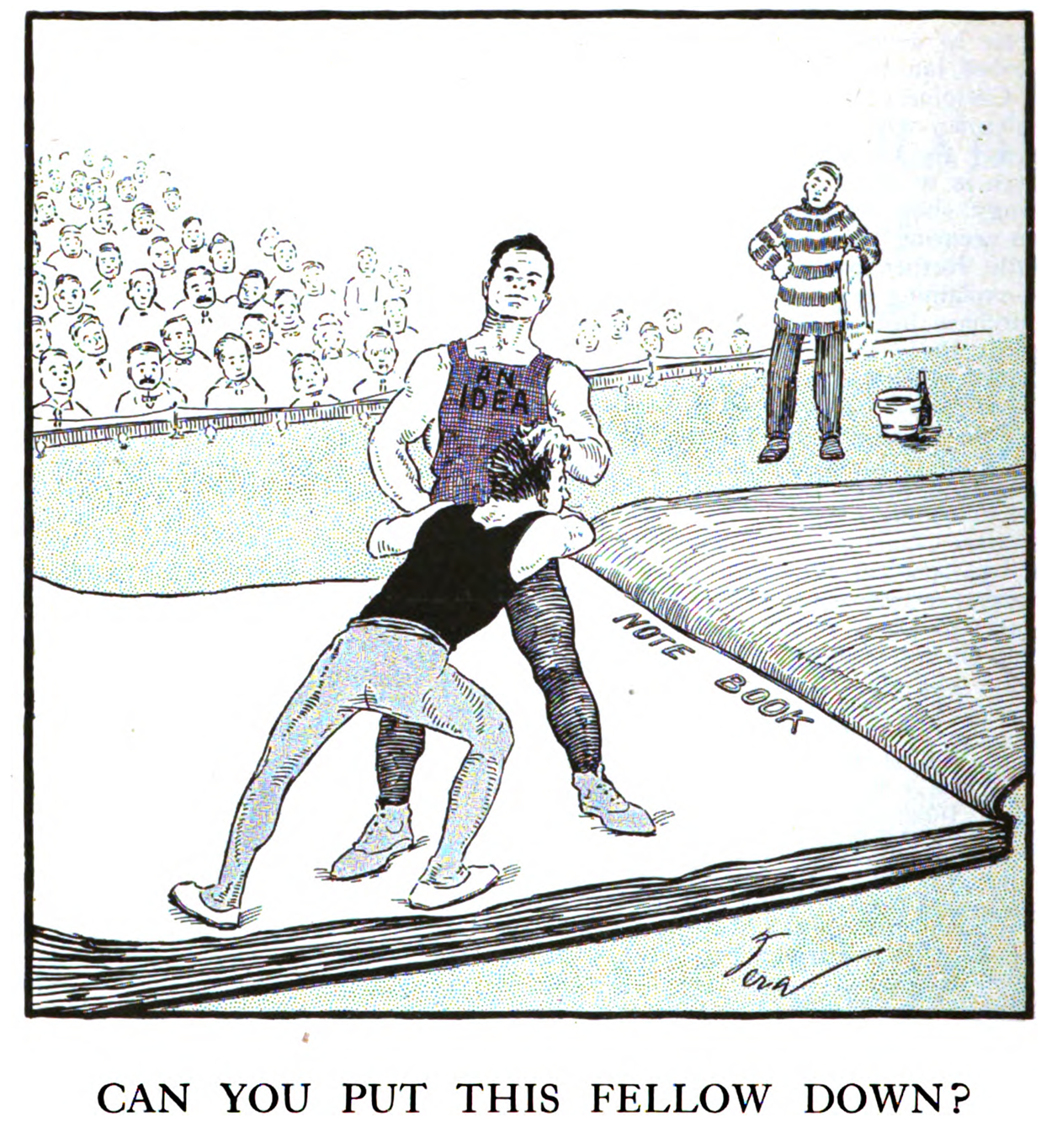
If you really want to learn, write every day.
Nobody in my past would ever have described me with the word “smart”. I mean, I was a borderline dumbass growing up.
But now, I read a lot. Every day, when cool people are doing cool things, you’ll find me either reading…
- Research: I subscribe to a massive database of applied research.
- Sales History: I’ve built a massive collection of late 1800s/early 1900s books and magazines on sales and sales management
I then write something every day. I don’t “journal”. I’m not sure anyone really cares about my opinion on things.
1906: Found in Salesmanship Magazine
“Get your idea down on paper. Writing it out in black and white is the sure test of its reasonableness. Unless you can put your plan on paper you can’t be sure that each step is logically developed, that every reason on which your plan is based has fact behind it and not merely assumption.” – Salesmanship Magazine, 1906
Instead, I have a mini-process:
Research:
– I choose a study that sounds interesting, that has nothing to do with sales. For example, I put my brain in sales mode, then read a new study from the Journal of Applied Psychology on “First Impression Effects in Organizational Psychology” or a new study from the Journal of Marketing Research on “The Impact of Historical Price Information on Purchase Deferral”
– I then write 600-1000 words on what I think it means to sales or sales leadership.
Sales History:
– I read an article or a chapter from say a 1906 edition of Success Magazine.
– I then write 600-1000 words on what I think the lesson is for sales or sales leadership today.
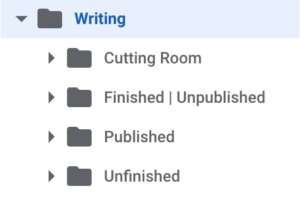
My Google Drive Folder
If my brain triggers, it often riles up my nerdery to do more research and turns into something cool.
Many times, I write in circles, and the result is a garbage article. But in every case, I’m now smarter on the topic.
I have a Google Drive folder that has subfolders of “unfinished”, “finished unpublished”, “published” and “cutting room”.
From that same Salesmanship Magazine article in 1906:
“There are many varieties of imitation thinkers. Ask them to put the most trifling plan in writing, so that it can be analyzed, and they will fade from the scene. Write out your plans. That shows whether they are practicable. An idea that isn’t definite enough to be written down, isn’t safe to bank on.”
If you’re not getting smarter, yer prolly getin dummer.
Make exercising your body and your brain a daily ritual. Watch what happens.
If you’re finding this, and want to get the “best of” my nonsense in your inbox, I do publish a newsletter every other week. It’s easy to sign up, and I swear I’m not offended if you decide to unsubscribe.
Sign up for the newsletter. I don’t cost nuthin’.





0 Comments